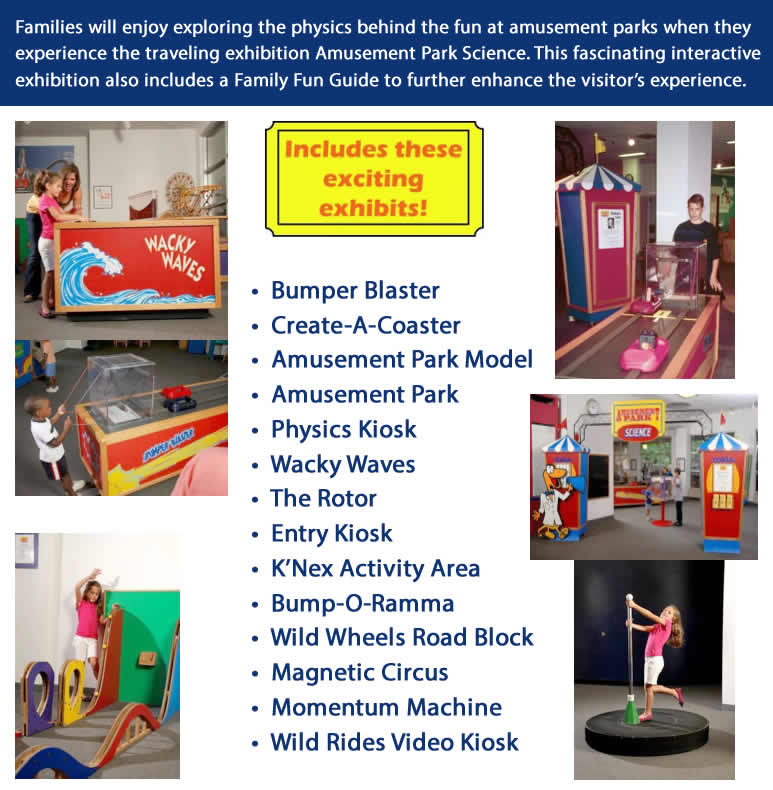
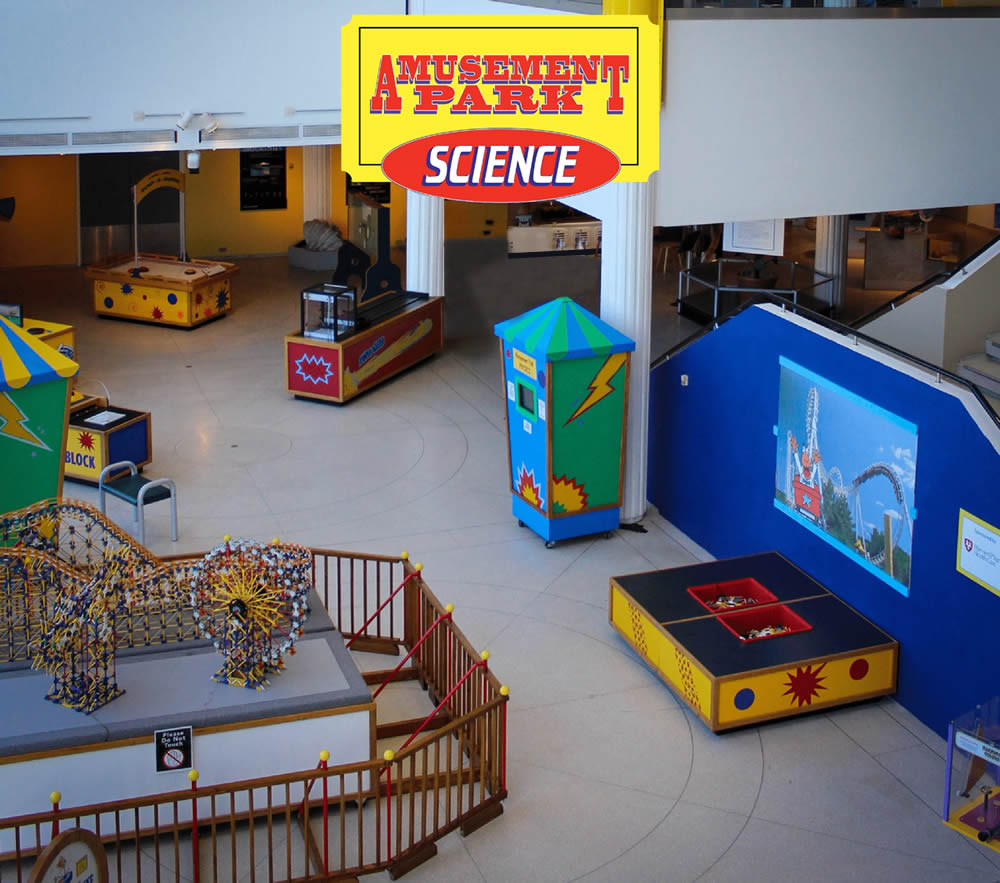
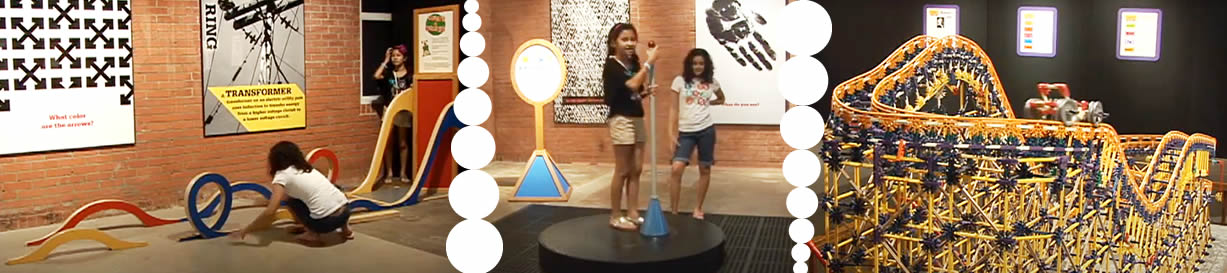
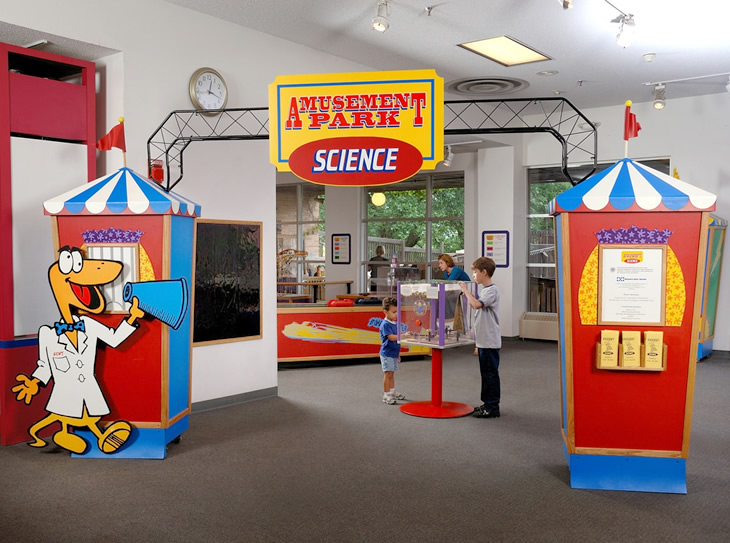
The Amusement Park Science Exhibitinvites visitors to explore a dozen different interactive features that provide a hands-on taste of how our favorite amusement park rides work. Everyone loves amusement parks but few understand the inner workings. Kids and adults will both love to explore this exhibit.
Watch Video (Below)
The amusement park science exhibit is 1,800 square feet and a perfect fit for state and county fairs and festivals
or any event with carnival rides that wants to add an educational element.
Exhibit Descriptions (1,800 square feet)
Entry
Newt, the exhibit mascot, welcomes visitors to Amusement Park Science. “Ticket Booths” are on lockable casters.
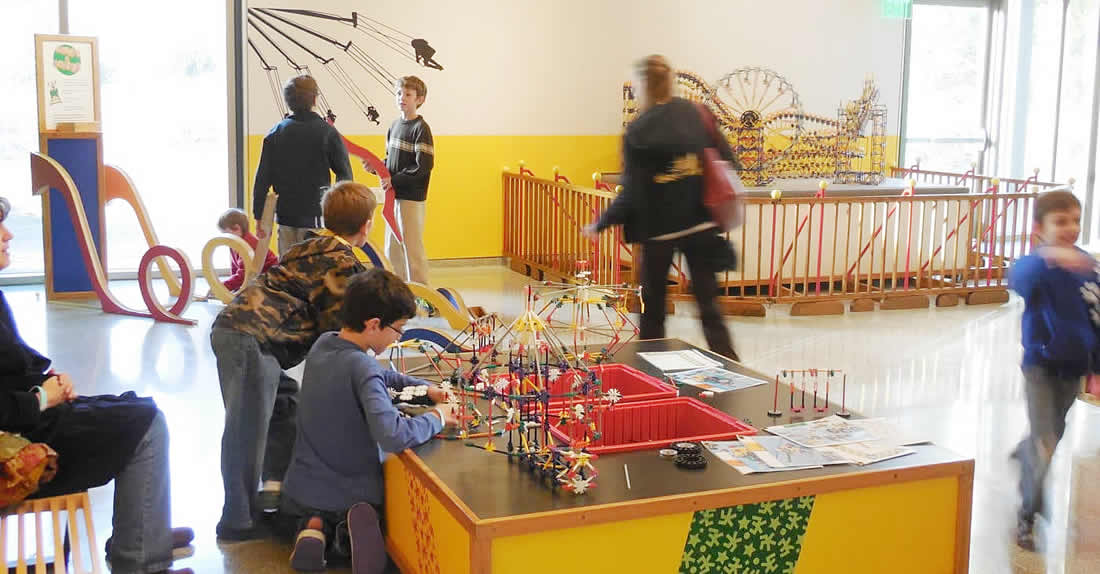
Amusement Park Model
Constructed and donated by K’Nex, these working models represent classic and popular amusement park rides like the roller coaster, swings and Ferris wheel.
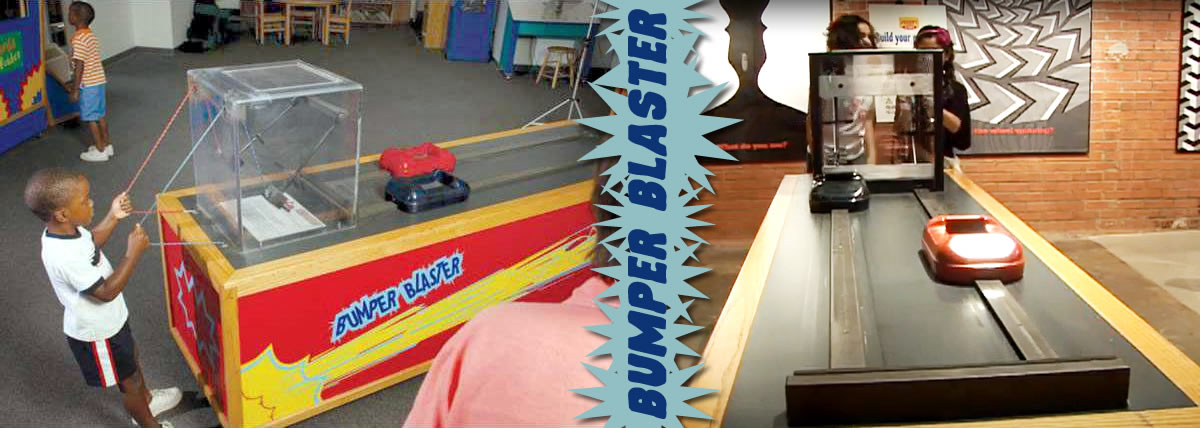
Bumper Blaster
Two molded polyurethane cars are placed next to one another on steel tracks, visitors strike the cars with weighted pendulums. By experimenting with the force with which the pendulum strikes the cars, visitors can vary the distance cars travel.
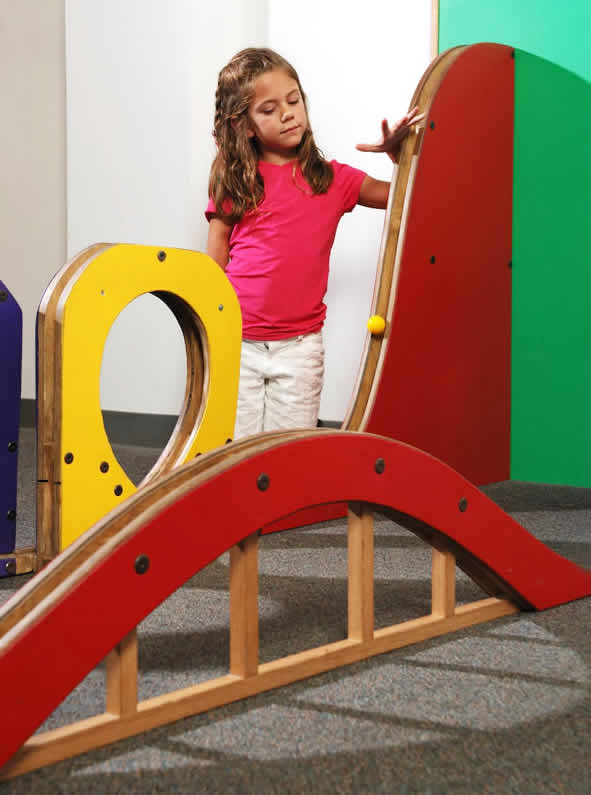
Create-A-Coaster
Visitors can experiment with potential and kinetic energy by setting up a roller coaster track. Hills and circular loops made from wooden tracks can be fit together in different combinations.
K’Nex Activity Area
By working together, families can use K’Nex to build model amusement park rides or their own clever creations.
Wild Wheels Road Block
This exhibit uses a pair of molded polyurethane cars and assorted “passengers” and parcels to demonstrate Sir
Isaac Newton’s First Law of Motion.
Magnetic Circus
Challenges a family’s skill with magnetism in a carnival setting. Acrylic cube with wooden bottom, painted steel base.
Momentum Machine
Visitors can spin on a rotating platform, having fun while learning about the Conservation of Angular Momentum.
Amusement Park Physics Computer Kiosk
A free-standing adaptation of a web page, controlled by a touch screen, allows visitors to learn about amusement park rides while simulating and internet experience.
The Rotor
The rotor is a cylinder, driven by a hand cranked belt and pulley system that spins just like the amusement park ride. When the visitor pushes the lever to drop the floor, the passengers stick to the wall.
Wild Rides Video Kiosk
Visitors can take a ride on actual amusement park roller coasters as seen from the riders perspective on a 30” video monitor. Each of the three coaster rides shown contains all the loops, spins and hair-raising plummets of the real ride, and, many visitors have commented that it has the same head-spinning, stomach-turning affect on the “rider”
Bump-O-Rama
Round, molded polyurethane cars with rubber bumpers simulate the “action and reaction” of a bumper car ride.
Wacky Waves
A hand cranked pulley and belt system rotate this cast acrylic clear container, half-filled with colored water, with two floats attached to the bottom. The spinning water forms a parabola, while the floats move toward the center. Demonstrates centripetal force.
ALL
DATES BOOKED OUT OF THE UNITED STATES MUST BE INDIVIDUALLY PRICED
DUE TO ROUTING, BORDER COSTS AND TAXES.